Case Study 3
Wood Framing
Background
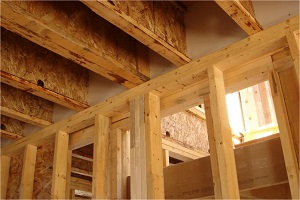
Wood remains the most popular framing material for residential houses. Not only because of the low material price tag, also because of it's availability, ease of manipulate and erection. Many residential wood framing does not need to be engineered. However, there are some situations which may cause the need of engineering.
Observations and Analysis
Most wood framed houses fall into the category of Part 9 of the building code. Some Part 9 buildings do not need engineer involvement at all. However, there are limits for this privilege. The following are some area that may require engineering.1. Long beams
Some long beams may be designed by the supplier. Usually the supplier provide design for free (kind of). When the beam span exceeds certain limits, most municipalities will require the beam designed by an engineer. The limit varies between different configurations and different municipalities.2. Tall Walls
Tall walls have special requirements. The wall studs need to be properly blocked. The top and bottom of the wall must be braced by the foundation or floor/roof sheathing. The headers and king studs need to be specially designed to resist lateral loads, ... etc.3. Shear Walls
Shearing walls are the structural members for resisting the later loads, i.e. wind and earthquake loads. They must be rigid enough to transfer the lateral loads to the foundation. Common designs are plywood or OSB panels. Nailing pattern is also important for the strength of the shearing walls. When there isn't enough continuous walls shown on the plans, Or too many walls are not aligned across floors, engineered shear wall design is required.4. Other factors
There are many other facotrs which may trigger engineering requirement. For example, total area of the building, number of levels, ... etc.Conclusion
Involving engineering will give the owner more assurance and peace of mind. But the time and cost is also considerable. So it is recommended that the above scinarials should be considered at the early design stage. Try to avoid engineering design as much as possible. A good designer should always keep the inspectors red lines in mind. Engineers should have good communication with designers so that a most economical solution can be reached.