Case Study 2
Brown Field Tie-Ins
Background
An oil sand SAGD central processing facility has been in production for a few years. The client started a new expansion project to increase the production capacity. Some new equipments were added to generate more steams to assist the oil extraction. Those new equipments need new foundations. The associated new pipes need supports. All these need to be done during the annual maintenance shut down period. The normal production should not be affected.
Civil Objectives
The key to the success of a brown field project is the cooperation of all disciplines. Original design documents and drawings for the existing plant are essential for carrying out the new design smoothly. As of civil structural, we need to achieve the following objectives.1. Site selection for new equipments
Site selection is the most important first step. A good site plan design can save equipment cost, reduce piping length, cable length and improve future production efficiency. That needs all disciplines work closely together. And civil structural's input is one of the key factors.2. Access road review/redesign
Some new large equipments have special trasportation requirement. The existing access roads may not have enough clearance, not wide enough or turning radius not enough for the large rig. Civil needs to review the existing road system. Suggest reasonable shipping route. Widen some existing road and add some new road for the plant.3. Drainage review/redesign
With the additional equipment installed, the existing site drainage may not work anymore. Civil needs to review the exiting drainage plan. That includes redesign of both storm water and sewer systems.4. Additional Steel Structures Design
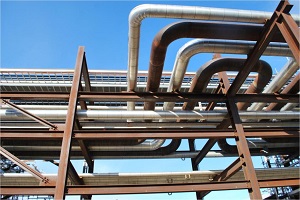
The new equipments and pipes need steel structures to support them. New piperacks and buildings are also required. Some new steel structures may be on top of or attached to existing structures. The existing structures also need to analysed for the changed loading situations.5. New Piles and Foundations
The new equipments requires piling and foundation system. The pile driving machines need to have access to the proposed locations. The pile driving activities should not affect the integrity of existing structures. The foundation and operating platforms are preffered to be steel instead of concrete, due to the narraw installation widow and cost issues. Our engineers coordinated with other disciplines, vendors, contractors and client. Worked out an excellent design and solved all the questions and concerns.Challenges and Solutions
Brown filed design needs more engineering experience than green field. A lot of existing conditions may be barriers for the new design. The addition of equipments may also cause new conditions. All these must be taken into account before the design is finallized. The design engineers must be very familiar with the advantages and disadvantages of different construction methods, procedures and machinaries.
1. Pile Constructability
We tried our best to design all the new piles at locations where the pile driving machine can have access and have enough operating clearence. All the new piles are at certain safe distace to existing piles. There were still a few location where piles were not avoidable but no safe clearence for pile driving. A few options were compared. The final solution was to use micro piles at those locations. The headroom clearance requirement of micropile installation is much smaller than other pile driving machines.2. Storm Water Drainage
Because of the plan layout change, the original drainage design did not work anymore. At some low areas, the storm water volume was much higher than previous deisgn. How to safely draing it out became a challenge. We provided a solution to resolve that. Regrade ground slope and ditches so that water of the area flows to a sump lift station located at the boundary of the area.The water is pumped up to a higher elevation and gravity drain to the next area, and further drain to the storm water pond.3. Missing Asbuilt Drawings
Client was not able to provide all the asbuild drawings for all the existing structures. That was a big difficulty for tie-in designs. How to make sure the actual installed equipments and pipes are exactly at the design location? Is the new design going to work? We closely work with the general contractor on site. The contractor helped us confirmed a lot of dimensions and sent us many useful photos. That was really helpful. At some key locations, our engineers went to site in person to collect data. All those efforts still did not cover 100% of the issues. During the constrution, our support team provided 24-7 on call support to assist any construction issues. All support questions were professionally replied and documented for future reference.Conclusion
This was a smaller size project comparing to other projects we had done before. However it is very complicated and very challenging. This type of project requires very senior level engineering experience not only in design but also in construction. Coordinations between disciplines, vendors, contractors and client operations team is also crucial for the success.